Author Archives: Simon

ZeroGen: Collagen Gel Polymerization in Zero Gravity

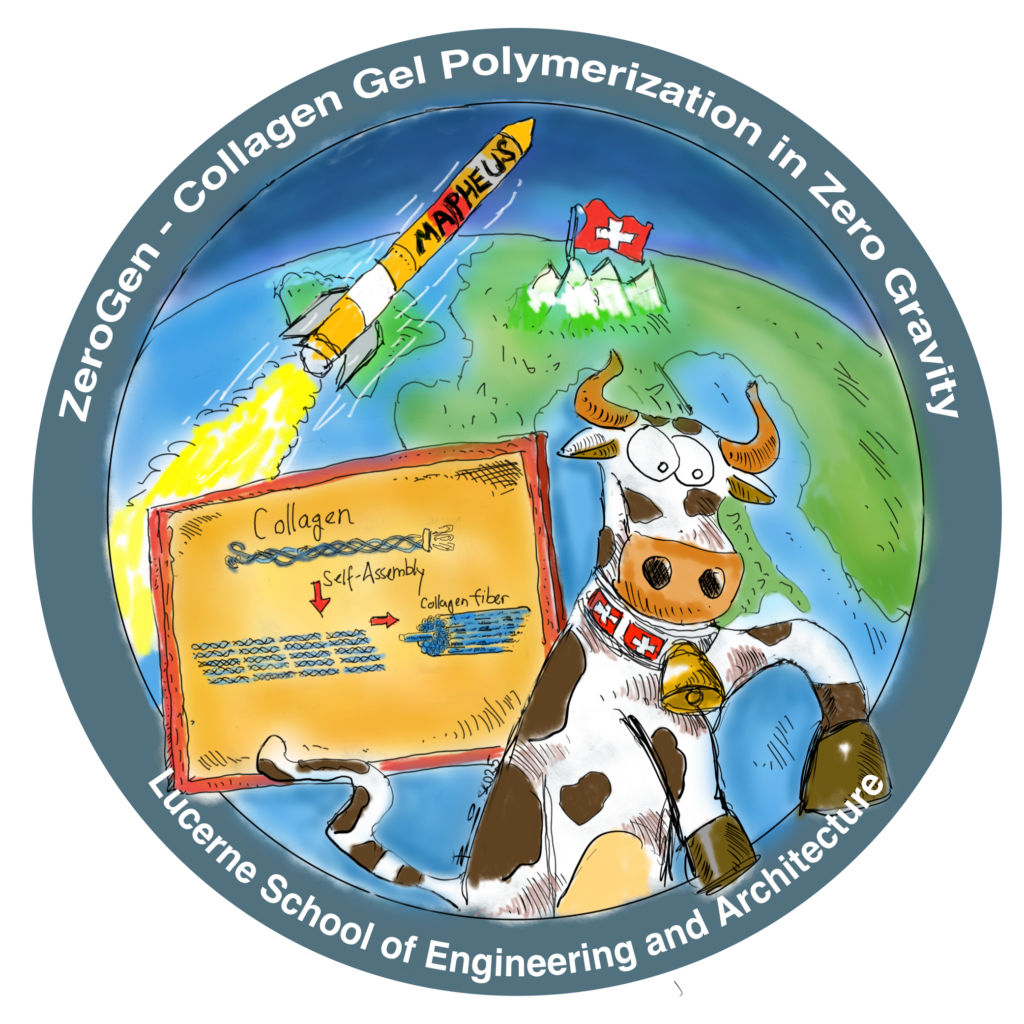
Life on Earth has developed under the constant influence of gravity. Multicellular animals developed specialized connective tissues – including the skeleton – to maintain body and organ shape against this constant force. The major component of calcified and non-calcified connective tissues are collagens representing 25% of body weight. Over 90% of the collagen is type I collagen which forms fibrils of highly variable thickness that stabilize structures such as the cornea of the eye, tendons, skin and bone. Collagen fibrils are formed outside cells by supramolecular assembly of rod-like collagen triple helices. This can be emulated in vitro as hydrogel formation. Human space flight has impressively demonstrated that microgravity affects many physiological processes; even molecular structures have been proven gravity-sensitive once they reach a critical size. One such example is collagen fiber assembly which leads to the formation of more homogeneous hydrogels in microgravity during a space shuttle flight. However, this first study was done in a purely aqueous system and did not consider early fibrillogenesis. We intend to study the early kinetics of fibril formation under conditions of macromolecular crowding which reflects the physiological milieu of the body more closely and accelerates fibrillogenesis leading to more but thinner fibrils. For space medicine (bone health, tissue maintenance and repair) the experiment will provide new valuable insight on the modulation of crowded collagen fibrillogenesis. Here we will polymerize collagen gel in microgravity during a sounding rocket flight.

Ongoing project…
CaMPARI – Parabolic Flight

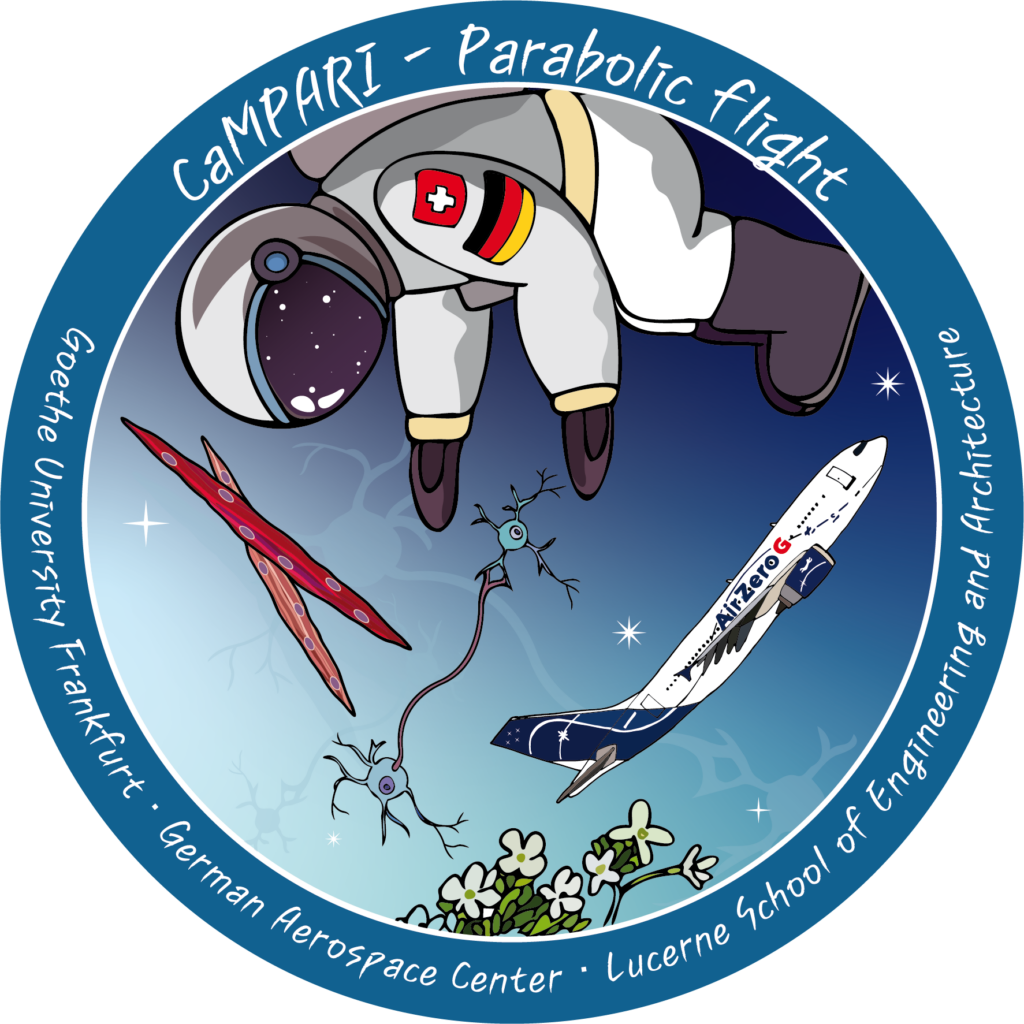
Calcium signaling is a hallmark of environmental adaptation processes in all eukaryotic cells. Changes in intracellular calcium levels in response to changes in gravity have been described for mammalian and plant cells. Calcium signaling functions in single cells to activate downstream cellular responses like membrane depolarization. Furthermore, calcium signaling serves as a mode of communication between cells, often in conjunction with hormones, facilitating an intricate interplay of different cell types, tissues, and organs that cannot be studied in single cells but requires analysis of intact organisms.

In this comparative study of calcium signaling in mammalian cells and Arabidopsis thaliana whole plants, cell lines and Arabidopsis thaliana transgenic plants expressing the genetically-encoded calcium reporter CaMPARI2 are generated. This project will complement molecular analyses like transcriptomic and proteomic studies by addressing the lack of spatial resolution in these studies by visualizing secondary messenger signaling in organs and cell populations. The experimental concept includes optogenetics hardware, which photoconverts the irreversible calcium reporter CaMPARI2 during a parabolic flight. Our goal is to understand calcium signaling events in response to altered gravity in eukaryotic cells.

Ongoing project…

CaMPARI – Cellbox

This research project focuses on the prolonged effects of altered gravity on intracellular calcium levels within biological systems. We specifically target iPSC-derived neurons, where changes in intracellular calcium levels in response to gravitational shifts have been observed. However, the underlying molecular mechanisms driving these changes remain a mystery. Signal transmission rates of neuronal activity could be altered due to changes in calcium levels, thus impacting neuronal function and performance. Our innovative approach, integrating the genetically encoded calcium reporter CaMPARI into cell lines, has already shown promising results. Our measurements have exceptional spatial resolution with advanced optogenetics hardware for precise photoconversion and high-resolution spinning-disc microscopy. Through this novel methodology, we aim to uncover the fundamental signaling pathways that mediate calcium dynamics in response to gravitational changes, thereby advancing our under-standing of how eukaryotic cells adapt to such conditions and identifying critical mechanisms of gravitational biology.

Ongoing project…

CaMPARI – Centrifuge

Investigation of the impact of altered gravity-induced calcium signaling on biological systems, including neuronal function and plant environmental adaptation, to provide insights into optimizing astronaut performance during long-term space missions. While changes in intracellular calcium levels have been observed in human and plant cells in response to changes in gravity, the details of these changes remain unclear. To address this, we run a comparative study of calcium signaling in neurons and plants. To facilitate this study, we have generated cell lines and transgenic plants expressing the genetically encoded calcium reporter CaMPARI2. This project will provide spatial resolution and complement existing and ongoing molecular and microscopic analyses. By understanding calcium signaling events in response to elevated gravity through centrifugation, we gain in-sights into how eukaryotic cells adapt to environmental changes and identify the impact that arises from altered neuronal signaling and suboptimal crop growth on long-term crewed space missions.

Ongoing project…

EReCC: Electrophysiologcal Recordings during Centrifugation in Chondrocytes

Articular cartilage lines the articulating bones in joints and allows almost effortless movement. Adequate daily mechanical loading is critically important for cartilage maintenance and prevention of a pathological breakdown developing into osteoarthritis. Understanding the underlying mechanisms of mechanosensation of cartilage is of central importance; not only for preserving good health of astronauts during long-term space missions but also for patients suffering from irreversible cartilage degeneration.

In articular cartilage, only one cell type is found, the chondrocytes, which are responsible for the synthesis and maintenance of the matrix. These cells have shown to respond greatly to their mechanical environment. To date, however, the underlying mechanotransduction pathways are not fully understood. Experiments suggest that mechanosensitive ion channels could play a central role in the early events of mechanosensation. To better understand the influence of gravitational loads, and its potential link to intracellular calcium signaling, we record cytosolic free calcium and the membrane potential in chondrocytes exposed to hypergravity on a centrifuge.

Ongoing project…

Continue reading

OoDrop

OoDrop Logo

Exposure to acute and prolonged microgravity triggers numerous physiological adaptations. To date, the underlying molecular mechanisms are not well understood, and several pathways have been proposed. Among other candidates, specific ion channels are hypothesized to be gravity dependent, but it has not been possible to conclusively demonstrate gravity dependency of specific protein entities. Therefore, we developed a miniaturized two-electrode voltage clamp (TEVC) that allowed electrophysiological experiments on Xenopus laevis oocytes using the GraviTower Bremen Prototype (GTB-Pro). The GTP-Pro is capable of flying experiments on a vertical parabolic trajectory, providing microgravity for a few seconds. As an interesting first candidate, we examined whether the nonselective mechanosensitive ion channel PIEZO1 is gravity dependent. The results showed no difference between PIEZO1-overexpressing and control oocytes under acute microgravity conditions.

Continue reading

openµView

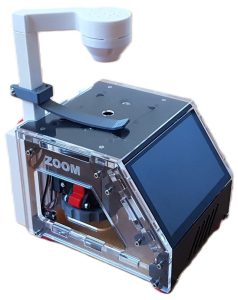
Light microscopes became essential tools in everyday lab work a long time ago. However, most commercial microscopes are costly, and they are often bulky and heavy. Therefore, microscopes are rarely seen in mobile applications or used by interested amateurs. Here, we present an affordable, portable single-lens microscope. It essentially uses a Raspberry Pi single-board computer, a camera, a touchscreen display, and an LED ring at its core. Apart from brightfield microscopy, contrast-enhancing methods by oblique, dark-field, and Rheinberg illumination are possible, as well. The microscope is ideal for applications that do not require high-end optical components. Due to its low cost and flexible use, it is also suitable for hands-on experiences of the fascinating world not visible by the human eye.

Continue reading