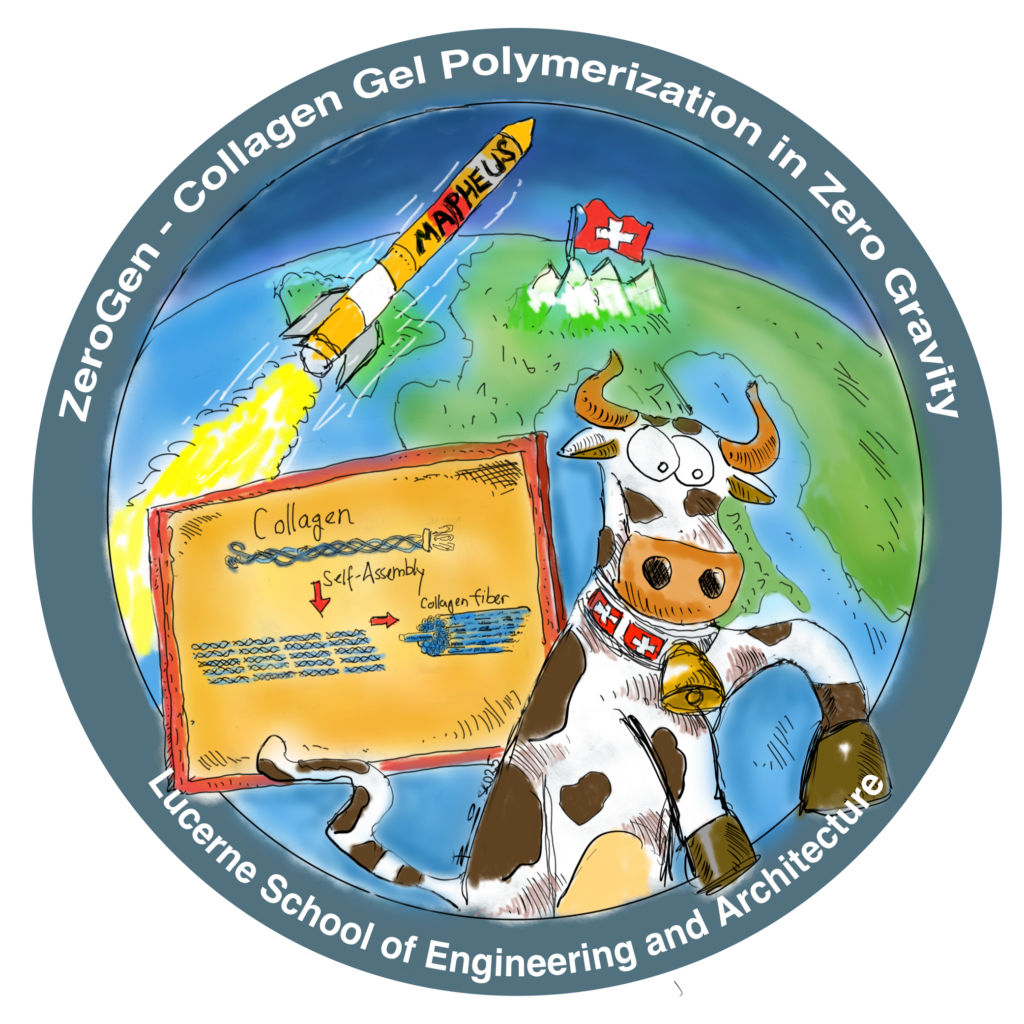
Life on Earth has developed under the constant influence of gravity. Multicellular animals developed specialized connective tissues – including the skeleton – to maintain body and organ shape against this constant force. The major component of calcified and non-calcified connective tissues are collagens representing 25% of body weight. Over 90% of the collagen is type I collagen which forms fibrils of highly variable thickness that stabilize structures such as the cornea of the eye, tendons, skin and bone. Collagen fibrils are formed outside cells by supramolecular assembly of rod-like collagen triple helices. This can be emulated in vitro as hydrogel formation. Human space flight has impressively demonstrated that microgravity affects many physiological processes; even molecular structures have been proven gravity-sensitive once they reach a critical size. One such example is collagen fiber assembly which leads to the formation of more homogeneous hydrogels in microgravity during a space shuttle flight. However, this first study was done in a purely aqueous system and did not consider early fibrillogenesis. We intend to study the early kinetics of fibril formation under conditions of macromolecular crowding which reflects the physiological milieu of the body more closely and accelerates fibrillogenesis leading to more but thinner fibrils. For space medicine (bone health, tissue maintenance and repair) the experiment will provide new valuable insight on the modulation of crowded collagen fibrillogenesis. Here we will polymerize collagen gel in microgravity during a sounding rocket flight.
Ongoing project…